What’s On/Finance
Quotes, pro formas and tax invoices: getting them right in the UAE
Quotation, pro forma, tax invoice, receipt and credit note: each has one job. Mix them up and payments stall, finance teams send documents back and the VAT return stops adding up.

Businesses tend to have four or five names for the paperwork they send about money, and they are rarely strict about which is which. Quotations get called pro formas. Pro formas get paid as if they were invoices. A receipt is sent when the client was really waiting for a corrected bill. It all feels harmless until a client's finance team bounces a document back, or the VAT return has to be reconciled against paperwork that never said what it was.
The fix is to give every document one job. Know the job and you know which document to send, what it has to contain, and whether it counts as a sale.
Please read this as general information rather than tax advice. The VAT points reflect the Federal Tax Authority's rules. For your own circumstances, check tax.gov.ae or ask an adviser.
Which document, at a glance
- Client still weighing it up: a quotation.
- Client has said yes but needs paperwork to raise a purchase order or pay a deposit: a pro forma, followed later by an invoice.
- Payment is due: an invoice, or a tax invoice if you are VAT-registered.
- Payment has come in: a receipt, if anyone needs one, that names the invoice.
- The amount due has been reduced: a credit note naming the invoice it corrects.
Just two of these are sales documents: the invoice, and the credit note that reduces it. Hold on to that distinction and your revenue, your receivables and your VAT return will reconcile.
Quotation: an offer, nothing more
A quotation sets out what the work will cost should the client decide to go ahead. It offers rather than asks for money, and nothing is recorded in your accounts because of it. Until it is accepted, no one owes anything.
Use the same wording the scope will use, item for item, so the client's finance team can later lay the invoice beside it and see a match without having to phone you. Put an expiry date on it as well, because a price given in January and accepted in June may no longer be one you can stand behind.
Number quotations separately from invoices. An unaccepted QUO-014 then leaves no hole in the invoice sequence, where a gap looks as though an invoice has gone missing.
Pro forma: a preview for the buyer
A pro forma invoice has the look of an invoice while remaining an offer. Gulf clients usually ask for one for procedural reasons: before procurement can raise a purchase order, free up budget or send a deposit ahead of the work, it needs a document shaped like the eventual bill.
A pro forma carries no tax status. It is not a tax invoice, and it cannot be used to reclaim input tax. VAT-registered suppliers do well to show the VAT the client should expect, since the client budgets from it, but that figure is only an estimate. Make that clear on the document itself.
The client budgets from the pro forma. The client pays against the invoice.
Letting a client pay against a quote or pro forma, as though it were the invoice, is a known reason for invoices being rejected. If the client has already paid from the pro forma, you still owe them an invoice.
Invoice or tax invoice: it depends on you
The invoice is where payment is actually requested. It puts revenue on your books and a receivable on your balance sheet. Which type a UAE business issues comes down to its own VAT registration, not the client's.
- Not registered for VAT: issue an ordinary invoice with no VAT on it at all. An unregistered business that charges VAT, or labels a document a tax invoice, has created a problem by doing so.
- Registered: issue a tax invoice. It charges VAT at 5% and has to carry the particulars the FTA lays down, among them the TRNs of both parties, a sequential number, the dates, the VAT rate and the VAT amount in AED.
- A simplified tax invoice, with fewer particulars, applies in two cases: the client is not VAT-registered, or the client is registered and the supply is worth AED 10,000 or less.
Then there is timing. As a general rule a registered supplier issues the tax invoice within 14 days of the date of supply, and for services that date is typically the earliest of three events: the work being finished, payment arriving, or the invoice going out. That rule is exactly what trips businesses up when deposits are involved.
When a deposit is paid on a pro forma
Picture it with numbers. An agency issues a pro forma of AED 40,000 plus VAT for a launch campaign. In week one the client pays a 50% deposit against it. A month on, the work is done and the agency sends a single invoice for the whole amount.
Here is the problem. Receiving money can set the date of supply for whatever portion was paid, and the pro forma, having no tax status, did nothing to account for the VAT on it. The cleaner route is a tax invoice for the deposit when it lands and another for the balance when the job is finished. Each invoice then mirrors a payment that really happened.
Receipt: proof that money arrived
A payment receipt simply acknowledges that money was received against an invoice. The invoice has already booked the revenue, so the receipt adds none. Record both as income and your reports will show double what you truly earned.
Receipts earn their place with clients who pay in cash or by cheque, with creators and suppliers who need evidence they were paid, and with any finance team that requests them. Each one should reference its invoice and state the amount, the date and how the money was paid. A receipt without an invoice reference is a figure with no story behind it.
Credit note: reducing what is owed
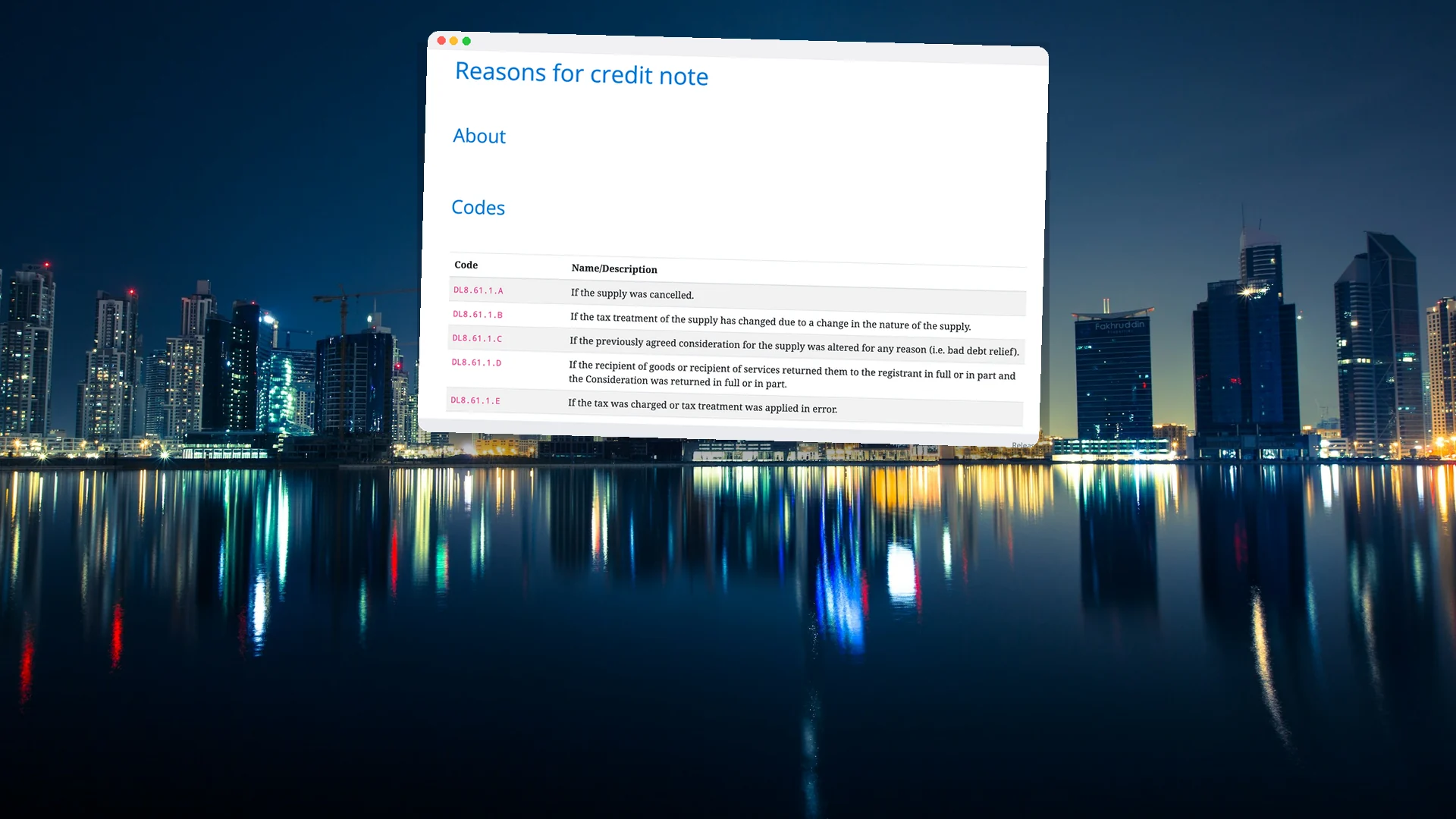
An invoice that has been sent should stay as it is: no edits, no reissuing. When a fee is cut, part of the work falls away or a figure turns out to be wrong, you correct it with a credit note that points back to the original invoice.
Where a registered business is correcting a tax invoice, that credit note becomes a tax credit note. It reverses the VAT together with the amount, and it needs much the same particulars as a tax invoice, including the value of the change and the VAT adjusted. Because it reduces revenue, your books end up showing what the client will genuinely pay.
A final habit ties it together: let an accepted quotation flow into its invoice without retyping, so the wording and numbers stay identical from offer to bill.
If your quotations and invoices come from a patchwork of old templates, ALXO can help you design a consistent set and automate the steps between them. For questions about your own VAT position, a tax adviser is the right call.