What’s On/Finance
Zero-rated, exempt and out of scope: UAE VAT categories explained
UAE e-invoices will give every line its own VAT category from 2027. For most service businesses the choice is standard or zero-rated, but knowing the other two prevents costly mistakes.
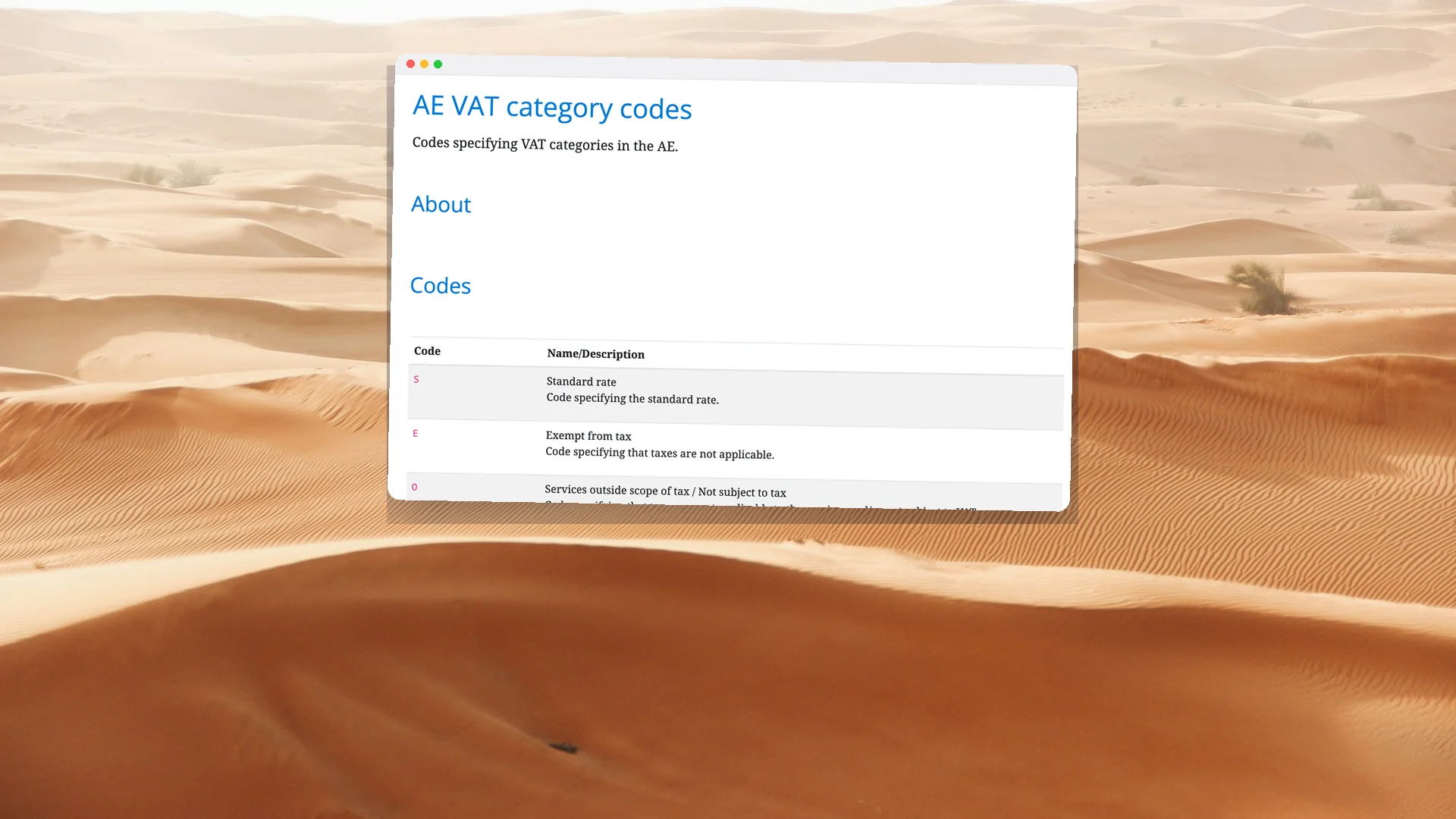
On most invoices today a single VAT rate covers everything. E-invoicing assigns a category to every line: standard rated, zero rated, exempt, out of scope, or reverse charge for certain domestic goods. Choosing wrongly will be visible line by line.
The four categories
- Standard rated (S): VAT at 5%, the default for services supplied in the UAE.
- Zero rated (Z): taxable at 0%, with input VAT on costs still recoverable.
- Exempt (E): not taxable, and input VAT on related costs cannot be recovered.
- Out of scope (O): neither taxable nor exempt, outside VAT entirely.
Exempt is rarer than people think
Article 46 of the VAT Decree-Law has just four exempt categories: certain financial services, residential buildings that are not zero-rated, bare land and local passenger transport. Creative, marketing, consultancy and most professional services fit none of them. Labelling them exempt undercharges VAT and blocks your own input VAT recovery at the same time.
Zero rating for services
Article 45 lists 14 zero-rated supplies, and for service businesses the relevant one is exported services under Article 31 of the Executive Regulation. The customer must have no residence in the UAE and be outside the UAE while the work is done, the work must not relate to UAE property or goods in the UAE, and it must not be a service treated as performed in the UAE. Services carried out outside the UAE can qualify too. If someone in the UAE, such as the customer's local staff, will receive the service and could not fully recover the VAT, the zero rate falls away.
Out of scope, in practice
- Disbursements paid as the customer's agent and passed on at exact cost.
- Selling a whole business as a going concern to a taxable person.
- Fees charged by government bodies acting in a sovereign capacity and not competing with the private sector.
- Employees' work, which is not a business activity.
- Supplies whose place of supply is outside the UAE.
Designated zones
A customer established in a designated zone counts as UAE resident, and services supplied in a designated zone are treated as supplied in the UAE. Only qualifying goods receive special treatment. On 2 October 2026 the FTA published TAXP010, a new guide to designated zones across corporate tax, VAT and excise.
On the e-invoice
- Every line carries S, Z, E, O, or AE for the domestic reverse charge.
- Exempt lines need an exemption reason code, for example DL8.46.1 for financial services, and standard-rated lines must not have one.
- Out-of-scope lines carry no rate, and no reason is required.
- Zero-rated supplies still need a full tax invoice, as the relief for wholly zero-rated supplies does not apply to e-invoices.
Some everyday examples
- A monthly service fee for a Dubai company: standard rated at 5%.
- Consultancy for a London company with no UAE presence, carried out while it is abroad: usually zero rated, provided the export tests are met and recorded.
- An event or shoot in the UAE for an overseas customer: check the place of supply rules for cultural, artistic and similar services first.
- Costs bought in the customer's name and passed on at cost: out of scope as a disbursement.
- Costs bought in your own name and recharged: follow your main service, usually 5%.
If you are unsure which category your services fall into, ALXO can help you set your invoices up correctly before e-invoicing makes every line count.