What’s On/Search
When shoppers ask AI what to buy, who gets recommended?
A large share of shoppers in the UAE and Saudi Arabia now use AI on the way to a purchase. Here is what OpenAI, Google and Perplexity say about how they pick products, and the practical steps a brand can take.
Search used to mean ten blue links. Increasingly it means a single answer from an assistant, and in the Gulf that habit is well established. Tabby's survey of more than 20,000 shoppers in Saudi Arabia and the UAE, published in March 2026, found 43 percent use AI when deciding what to buy, while only 30 percent fully trust what it recommends. Visa's UAE study, published in June, found 85 percent had used AI tools for shopping, most often to read reviews and compare prices. The two surveys measure different things, so do not stack them, but the trend is plain.
What ChatGPT says it uses
- Structured product information from third-party providers, such as price and description.
- Other third-party content, including reviews.
- The shopper's own request and context, including memories and custom instructions.
OpenAI says these product results are not adverts and that it takes no commission, and that labels such as Most popular are written by ChatGPT rather than the seller. Merchants can provide a product feed with nine required fields, among them title, description, brand, image, availability and price, refreshed whenever prices or stock change. OpenAI does not publish how products are ranked. Buying inside ChatGPT, known as Instant Checkout, was withdrawn in March 2026, and purchases now finish on the retailer's own website.
What Google says
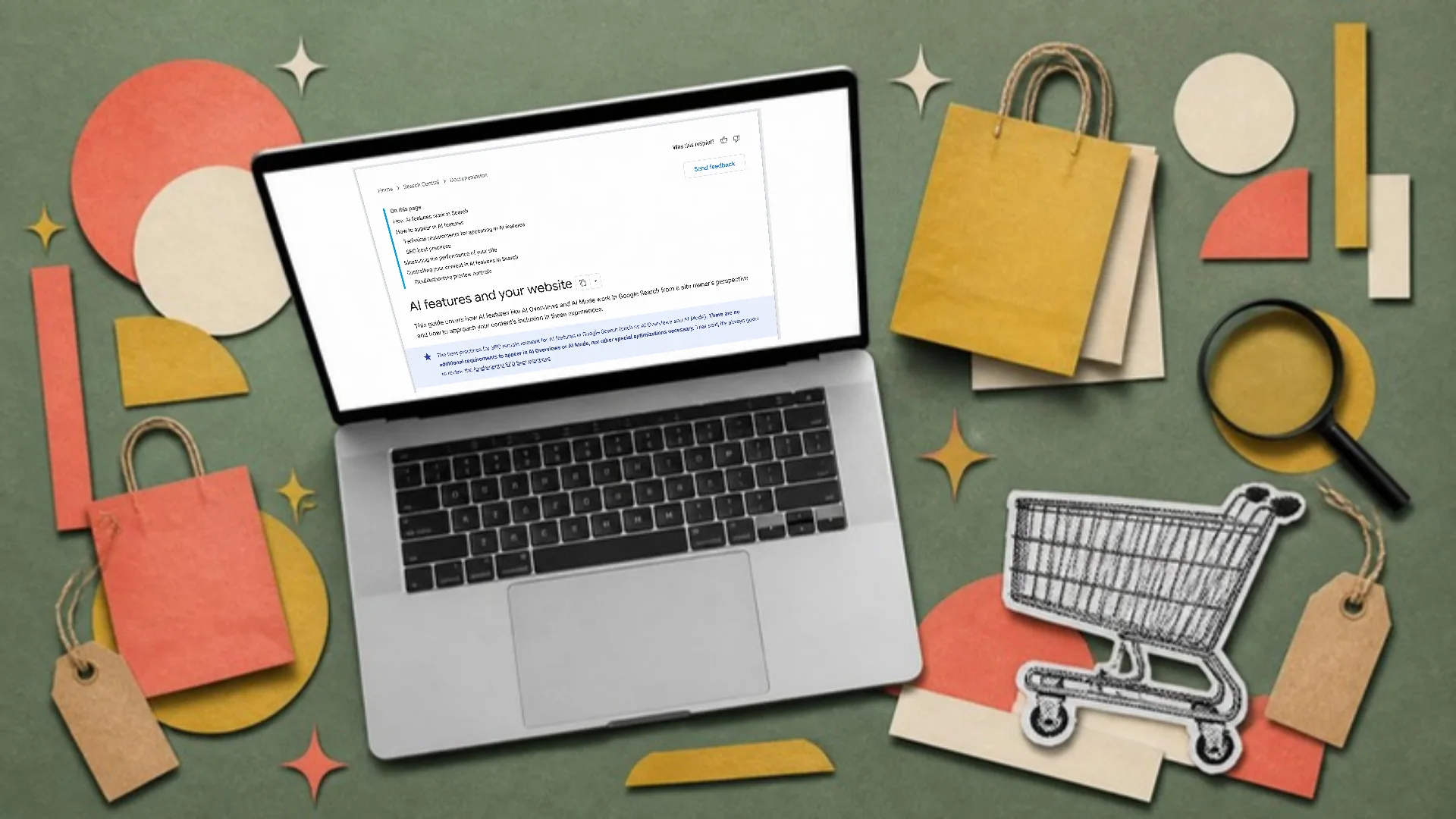
Google's position is that its AI features need no additional requirements, no special optimisation and no special markup or AI text files. Pages need to be indexed and eligible to appear as a snippet, and Google recommends accurate Merchant Center and Business Profile information. AI Mode runs many related searches in the background, which Google calls query fan-out, so pages that answer detailed questions have more ways to be picked up. It has been available in the UAE and Saudi Arabia since August 2025.
Perplexity and Meta
Perplexity runs a free merchant programme and says joining makes recommendation more likely because products enter its index, though its in-app checkout is US only. Meta is testing product carousels inside Meta AI for some US desktop users, linking out to retailers.
Where adverts fit
OpenAI states that adverts do not shape ChatGPT's answers and are labelled separately. ChatGPT ads now run in more than 60 countries for Free and Go users. Industry trackers reported the UAE and Saudi Arabia appearing on OpenAI's Ads Manager availability list around mid-September 2026, with reported daily minimums of 65 dirhams and 50 riyals and a need for a locally registered company. OpenAI has not announced it, so check in Ads Manager first.
Practical steps
- Make your product facts consistent everywhere: website, marketplaces and Google Merchant Center should agree on names, prices, stock and descriptions.
- Encourage genuine reviews on third-party sites. They are an input you cannot fake and should not try to.
- Answer real customer questions on your own pages in Arabic and English, from delivery times across the emirates to returns and comparisons.
- Join free merchant programmes where they exist.
- Treat promises of guaranteed AI rankings with caution. Google says no special markup is needed and OpenAI publishes no formula.
- Track referrals from chatgpt.com, perplexity.ai and Google in your analytics so you can see what AI is worth to you.
ALXO builds websites, product content and AI tools for businesses across the GCC. If you want your brand to be easy for people and assistants to understand, let us talk.