What’s On/Influencer
Reading a creator's media kit before you book them
A media kit is the creator's case for your budget. The useful ones are short, dated and honest about the numbers, and they tell you quickly whether the fit is real.

If you are shortlisting creators for a campaign in Dubai or Riyadh, you may go through dozens of profiles in an afternoon. The media kit is where you turn when a profile catches your eye, and within a couple of minutes it should tell you whether to get in touch or move on. The best kits are not long, and they do not need to look like a brochure. They answer your questions before you have to ask.
This guide is written from the brand's side of the table: what a useful kit contains, which numbers to trust, how to sense-check a rate and what to confirm before anything is signed. Creators preparing their own kit can simply read it the other way round.
The basics every kit should cover
One or two pages is enough, or a single profile page behind a link. You should find:
- The creator's name, home city and the languages they create in.
- Their niches in plain terms: food in Dubai, family life, fitness, tech reviews in Arabic.
- Every platform, with its handle, a link and a current follower count.
- Recent engagement, with the period it covers.
- An audience breakdown by country, age and gender.
- Brands they have worked with, and links to a few examples of that work.
- Any press coverage.
- Contact details, and how quickly they usually reply.
The strongest kits open with what sets the creator apart. A line such as "bilingual family content, filmed in Abu Dhabi, with an audience mostly in the UAE and Saudi Arabia" tells you more than a paragraph about a passion for storytelling, and it shows you straight away whether the fit is there.
Treat every number as a claim until it is checked
Figures in a media kit are often screenshots taken months ago, which is why agencies treat them as claims rather than facts. A creator who takes the work seriously makes checking easy: every figure dated, taken from their own insights and refreshed at least once a quarter. An undated number is a good reason to ask for a fresh screenshot.
The audience breakdown usually tells you more than the follower count. If you are launching in the UAE, the question is how much of the audience actually lives in the UAE. A creator whose followers are mostly elsewhere should say so upfront. It will surface anyway once you ask for insights, and the creators who are candid from the start are the ones who tend to earn a second campaign.
Engagement rate should be worked out from recent posts, not a single best-ever post, and compared with accounts of a similar size. Expect to check the public numbers yourself, and look for signs of bought followers or engagement pods. A clean account with modest figures is worth more than an impressive one you cannot trust.
Making sense of a rate card
A rate card sets out a price per deliverable: a reel, a feed post, a set of stories, a TikTok video, a YouTube integration. It is where negotiation begins, not a fixed price. Some creators publish rates in the kit and others share them on request. Either approach is fine; what matters is that the figures stay the same when you ask a second time.
There is no public price list for creators, in the Gulf or anywhere else, so every rate is an estimate. Our influencer rate calculator shows one defensible way to build one, with every number on screen so you can disagree with it. It starts from a rate per thousand followers that varies by platform and format, which is why a reel is priced above a single story frame. It then adjusts for how the creator's engagement compares with accounts of a similar size, but only by half the difference and within limits, so one strong month cannot double the price. Finally, it moves the figure for market position: value, standard or premium. Each format also has a floor, because below a certain size the maths gives a figure nobody would take the brief for.
For a sense of scale, the calculator's starting figure for an Instagram reel is USD 12 per thousand followers. A creator with 40,000 followers and typical engagement therefore lands at about USD 480 at the standard position, before any add-ons. Use that to sense-check a quote, not to write one.
Add-ons belong on their own lines
Usage rights, whitelisting and exclusivity should each be priced separately. Usage rights let you reuse the creator's content on your own channels or in your ads. Whitelisting lets you run ads through the creator's account. Exclusivity keeps the creator from working with your competitors for a set period. Each one costs the creator something, so each one carries its own fee.
A good kit also says what the standard fee covers, for example one post on the creator's account, one round of changes, and your right to share or repost it organically for a stated period. Anything beyond that is a separate conversation. Clear terms make a creator easier to book, not harder.
Confirm the permit before you sign
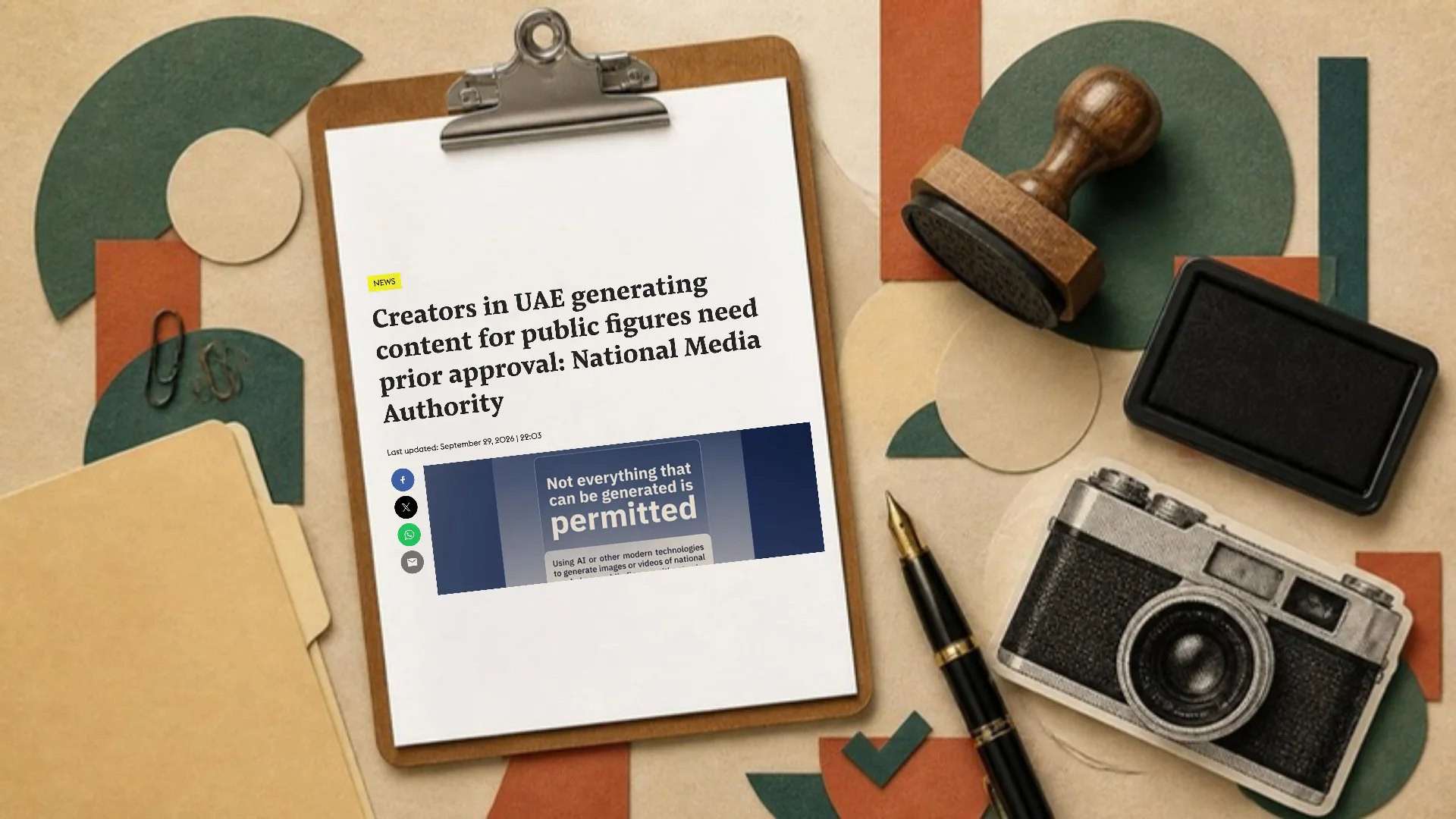
In the UAE, creators who advertise on social media need an advertiser permit from the National Media Authority, which took over from the UAE Media Council. The requirement has applied since 1 February 2026 and covers gifted posts as well as paid ones. For content aimed at Saudi Arabia, the equivalent is a Mawthooq licence from the General Authority for Media Regulation. A permit from one country does not cover the other.
Look for the permit status and its expiry date in the kit. Agencies are expected to check it before contracting, and if you are booking creators directly it is sensible to do the same. If a creator will be visiting the UAE for your campaign, raise it early, because a visitor advertiser permit is applied for through a licensed agency and takes time.
A current kit is a good sign
A creator who refreshes the kit every quarter, with new follower counts, engagement, audience breakdown and recent work, and who drops brands from years ago that no longer reflect what they do, is showing you how carefully they work. An out-of-date kit is not a reason to walk away, but it is a reason to ask for current figures before you commit. The standard on both sides is the same: current numbers, clear terms and nothing that turns out differently later.
If you are weighing up a shortlist for a campaign in the UAE or Saudi Arabia, talk to ALXO. We are happy to look over the kits with you before the brief goes out.