What’s On/Region
Operating in Saudi Arabia and the UAE without doubling up
Two currencies, two working weeks, two sets of client paperwork. The natural reaction is to run two of everything, and that is usually where the trouble starts.

The quickest growth in regional agency work at the moment comes from established agencies crossing the border, not from new ones, and more often at a client's request than by design. Any business that follows a client between Dubai and Riyadh finds the same thing: the work moves easily, and the admin does not.
Decide what has to be local
Some things genuinely belong in each country: the legal entity that invoices, the bank account, and someone who knows the market so well they can tell a client, with confidence, that the client is wrong. Do not try to economise on those.
Almost everything else benefits from being shared. Keep one version of the project structure, the approval process, the reporting format and the client record. That is what allows one office to step in for the other when a deadline falls badly, and what keeps two offices from growing incompatible standards for good work.
Riyals and dirhams do not add up on their own
Put a riyal-billed client in Riyadh next to a dirham-billed client in Dubai and there is no single revenue number until someone decides which exchange rate to use and on which date. Systems that hold one currency and merely display others will still show you a total. It simply is not a total fit for a board meeting.
Record the currency against each client, and let reports show the two currencies separately unless you ask otherwise. When you do want a combined figure, make it a deliberate conversion with the rate and date written next to it, rather than something a spreadsheet column produced by accident.
Four working days in common
The Saudi week runs Sunday to Thursday, while the UAE switched to Monday to Friday in 2022. People working across both share four days, and Thursday means something very different depending on which side of the border you sit.
Software cannot fix that. A shared calendar showing the real dates can, by making the mismatch something you plan for rather than something you discover on a Thursday afternoon with half the team gone. Most teams that do this well reserve Monday to Wednesday for joint work and let each office handle the edges of the week on local time.
Paperwork that differs by market
The two countries use different registration and tax identifiers, while a generic system typically gives you a single free-text box for both. That is fine right up until an invoice carries the wrong number and bounces back from a finance department with no intention of chasing you about it.
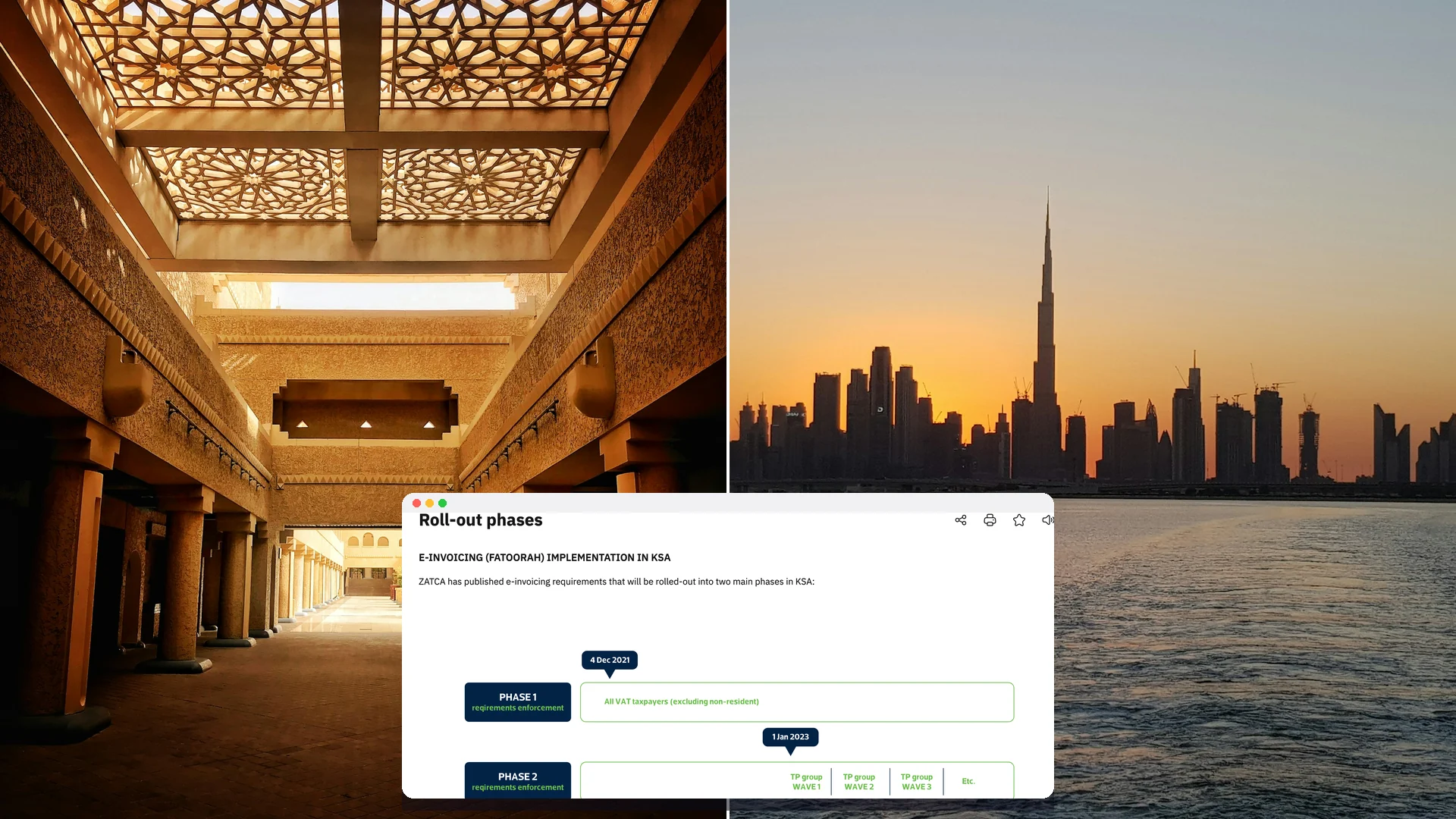
Wider invoicing rules differ too. Saudi Arabia and the UAE have adopted e-invoicing at different paces, and your accountant's requirements change with the market. Operational software is generally not built for accounting or tax filing, and it does not need to be. The point is that every invoice leaves with the correct details for whoever files.
One client, one record
Opening a second workspace for the new market feels like good housekeeping, and it stays tidy for roughly three months. After that, any client who works with you in both countries has two records, they start to disagree, and nobody can tell you what the relationship is worth as a whole.
Better one client record with a country on it than two records that mostly agree.
Price each market on its own numbers
Agencies moving into Saudi Arabia commonly either reuse the Dubai rate card as it stands or cut prices sharply to land a first client, and any service business will feel the same pull. Neither is based on evidence. Costs differ, competitors differ, and expectations about presence and responsiveness are often higher.
Build the new market's prices from its own numbers, with travel and the local presence clients will expect included. A rate that only works if nobody ever visits stops working the first time somebody does.
If you are building an operation across Saudi Arabia and the UAE and want the systems behind it to work as one, ALXO is happy to talk through the workflows and tools involved.